
As the demand for lead-acid batteries continues to grow across automotive, backup power, and industrial energy storage applications, the focus on operational safety and reliability has intensified. The battery separator, a critical component positioned between the positive and negative plates, plays a vital role in preventing short circuits, maintaining cell integrity, and ensuring consistent performance. JSJ recognizes the evolving requirements for separator performance and provides specialized silica materials that contribute to enhanced thermal stability and safety in advanced lead-acid battery designs.
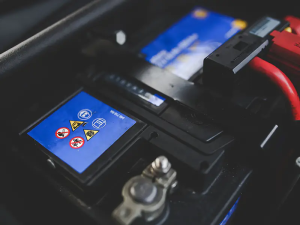
Improving Thermal Dimensional Stability
A primary safety concern in lead-acid batteries is separator deformation or shrinkage at elevated temperatures, which can lead to plate contact and reduced battery performance. The incorporation of high-purity silica into separator coatings or matrices helps address this risk. Silica particles possess high thermal stability and can act as a robust, heat-resistant scaffold within the polymer structure. This reinforcement reduces thermal shrinkage, helping the battery separator maintain its dimensional integrity even under high discharge rates or prolonged cycling, contributing to safer operation under normal or demanding conditions.
Enhancing Mechanical Strength and Puncture Resistance
During battery assembly and long-term cycling, the separator must withstand mechanical stresses without tearing or developing micro-tears that could compromise its insulating function. The addition of silica as a reinforcing filler improves the separator’s mechanical properties, including tensile strength and puncture resistance. This reduces the likelihood of damage from plate edges or handling, supporting the production of more robust and reliable lead-acid battery cells. This application represents one of the growing silica powder uses in the energy storage sector, where material reliability is paramount.
Optimizing Electrolyte Wettability and Ion Transport
Efficient lead-acid battery performance requires uniform wetting of the separator by the sulfuric acid electrolyte to facilitate consistent ion transport. The hydrophilic nature and tunable porosity of silica can enhance the separator’s affinity for the electrolyte, promoting faster and more uniform wetting. This improved wettability contributes to lower internal resistance and more consistent cell performance. Furthermore, the fine silica particles help maintain a uniform pore structure, supporting steady ion flow throughout the battery’s charge and discharge cycles.
Supporting Safer Battery Systems for Demanding Applications
The integration of silica into lead-acid battery separators aligns with the industry’s push toward more reliable and durable lead-acid batteries. By contributing to improved thermal stability, mechanical integrity, and electrolyte interaction, silica helps create a more resilient barrier within the cell. This is particularly relevant for applications requiring high reliability, such as automotive starter batteries, UPS systems, and industrial backup power.
Conclusion
Developing safer, high-performance lead-acid batteries involves innovation at the material level, including critical components like separators. Silica technology provides a pathway to enhance key separator properties that underpin battery reliability and lifespan. JSJ offers battery manufacturers consistent, high-purity silica products supported by technical expertise, helping lead-acid batteries perform safely and efficiently in demanding applications.