
Green tires are designed to reduce rolling resistance, improve fuel efficiency, and cut vehicle emissions. As environmental regulations tighten and mobility trends evolve, tire manufacturers face a long-standing technical challenge often described as the balance between wear resistance, safety, and energy efficiency. Improving one aspect often weakens another, making material selection a critical decision.
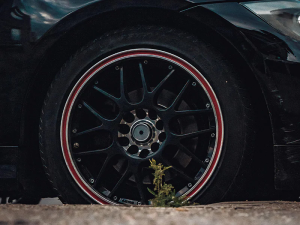
Since the early 1990s, the use of silica in tires has reshaped compound design. In 1992, Michelin introduced high-dispersion silica to partially replace carbon black, marking an important step toward better wet grip and lower rolling resistance. Today, silica-based solutions remain at the core of green tire development, especially as electric vehicles place new demands on tire performance.
Value and Limitations of Conventional Silica
Conventional silica plays an essential role in modern tread compounds. The use of silica in car tires helps improve wet traction, enhance flex fatigue resistance, and reduce rolling resistance, which directly supports fuel savings and emission reduction. For many passenger vehicle tires, silica has become a standard reinforcing filler rather than an optional additive.
However, ordinary silica is limited by its dispersion behavior in rubber systems. In traditional internal combustion vehicle tires, silica loading typically ranges from 15 percent to 25 percent. When formulators attempt to increase this ratio further, dispersion challenges emerge. Poor dispersion leads to weaker reinforcement, reduced abrasion resistance, and unstable compound properties. As a result, conventional silica struggles to fully replace carbon black or overcome the long-standing performance tradeoffs in tire design.
Advantages and Necessity of High Dispersion Silica
High-dispersion silica addresses these limitations through optimized particle structure and surface characteristics. Improved dispersion allows silica to interact more effectively with rubber matrices, delivering stronger reinforcement without sacrificing energy efficiency or safety-related properties.
This advantage becomes especially important in electric vehicle tires. Compared with conventional vehicles, EVs are heavier and deliver instant torque, increasing demands on wear resistance and heat management. In these applications, silica loading often increases to 25 percent to 35 percent, with total silica usage per tire set rising by approximately 15 percent to 20 percent. Such formulations place significantly higher requirements on dispersion stability and compound consistency.
JSJ Silica focuses on developing high-dispersion silica solutions designed for modern tire compounds. Our products support higher filler loading while maintaining balanced mechanical strength, abrasion resistance, and low rolling resistance. By improving processing stability and reinforcing efficiency, JSJ Silica helps tire manufacturers achieve reliable performance across both conventional and new energy vehicle platforms.
Conclusion: Silica Driving the Future of Green Tires
High-dispersion silica enables green tires to meet environmental goals without compromising durability or safety. It offers tire manufacturers greater formulation flexibility while supporting long-term sustainability targets. As mobility continues to shift toward efficiency and electrification, silica will remain a central material in tire innovation.
At JSJ Silica, we work closely with tire producers to deliver silica solutions that align with evolving performance and sustainability requirements. Through continuous material development and application expertise, we support the next generation of green tires powered by advanced silica technology.