Silica materials are widely used in different industrial fields because their properties can support various product formulations. For manufacturers, understanding how materials are produced and how they match application needs is important before making purchasing decisions. Silica powder is one of the commonly selected materials in industries such as oral care, silicone rubber, tires, and other product areas.
The production process of silica materials affects factors such as particle characteristics, purity, consistency, and application performance. By learning how silicon dioxide powder is produced, companies can better understand how raw materials are developed for different manufacturing requirements and how suppliers provide suitable material options.
Understanding Silicon Dioxide Powder Basics
Silicon dioxide is a material composed of silicon and oxygen elements. In industrial applications, it is processed into different forms according to the requirements of various industries. The final material characteristics can influence how it performs when combined with other ingredients during production.
For many manufacturers, selecting suitable materials is not only about the basic composition. They also need to consider factors such as particle distribution, compatibility, processing conditions, and the expected function in the final product. These factors help determine whether a material can fit a specific application.
Silicon dioxide powder produced through the precipitation process is used in several industries. It can be applied in oral care formulations, silicone rubber products, tire compounds, and food or cosmetic-related applications. Different grades are developed according to the performance requirements of each field.
The production method plays an important role in controlling material characteristics. Manufacturers usually evaluate raw materials, production conditions, and testing results together when developing materials for industrial customers.
Exploring the Main Production Process
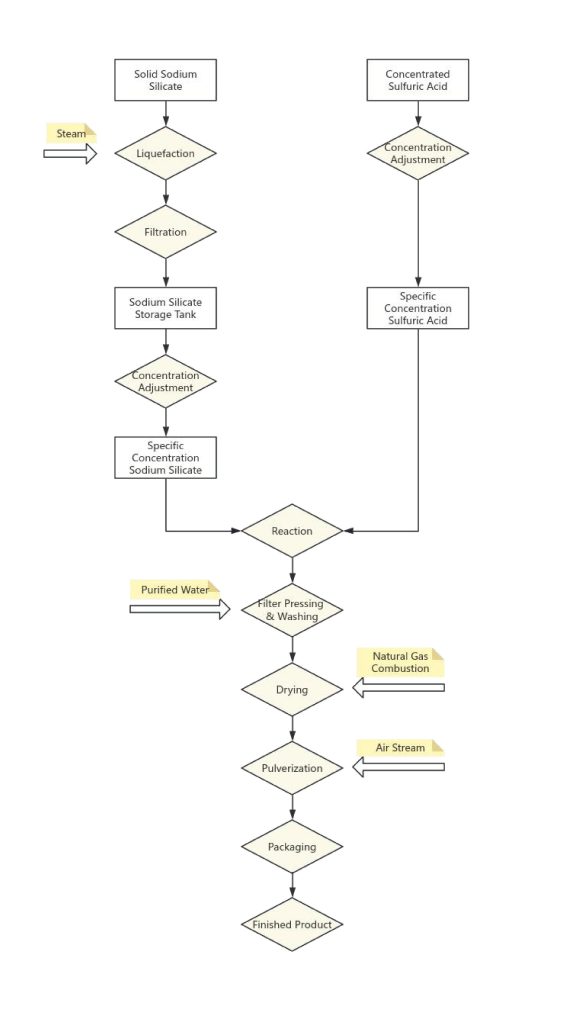
The production of precipitated silica generally involves a controlled reaction process. Raw materials are combined under specific conditions to form silica particles. After the reaction stage, further processes such as filtration, washing, drying, and classification are carried out to obtain the required material.
Each production step can influence the final properties of the product. For example, washing helps remove unwanted residues, while drying and classification help control the consistency of the finished material. These steps are important for maintaining stable product performance.
During production, manufacturers need to monitor different indicators to keep the material quality consistent. Laboratory testing can evaluate physical and chemical characteristics, helping production teams adjust processes according to application requirements.
At JSJ Silica, we focus on developing precipitated silica materials for different industries. Our production system combines automated equipment, digital management, and quality testing procedures to support stable manufacturing. We also work with customers to understand application needs and provide suitable material recommendations.
Matching Silica Materials with Industry Needs
Different industries have different expectations for silica materials. In oral care, manufacturers often evaluate whiteness, particle distribution, fluoride compatibility, refractive index, PCR, and RDA. These properties can affect cleaning performance, polishing behavior, appearance, and compatibility with other toothpaste ingredients. These factors influence how silica performs in toothpaste formulations.
For silicone rubber applications, material selection focuses on characteristics related to processing and final product performance. In silicone rubber applications, oil absorption may be considered during material selection, while precipitated silica is mainly valued for its reinforcing effect. Solid silicone rubber applications focus on stretch-whitening recovery, transparency, yellowing resistance, and processing performance, while liquid silicone rubber applications pay more attention to viscosity, flowability, transparency, and tear resistance.
In tire production, manufacturers often focus on silica dispersion and CTAB specific surface area. These properties can affect rubber processing and filler interaction, which may further influence tire performance in areas such as rolling resistance, wet grip, and wear resistance.
In food, pharmaceutical, and cosmetic applications, precipitated silica is often valued for its anti-caking and flow-aid functions. These properties help improve powder handling, storage stability, and processing consistency in different formulations.
Improving Material Development Through Cooperation
Modern material development requires cooperation between suppliers and manufacturers. Customer requirements are often different because products, production equipment, and market conditions vary across industries. Communication helps suppliers understand practical challenges during product development.
We have dedicated silica R&D and end-use application testing teams. This allows us to evaluate material performance under practical application conditions and verify products through structured testing before delivery. Our team works with customers to study material requirements and explore suitable approaches. Through laboratory testing and production verification, we support the transition from development ideas to practical manufacturing.
JSJ Silica also cooperates with universities, research organizations, and testing institutions to promote technology development. These partnerships support research into new material applications and help improve the understanding of silica performance in different fields.
For manufacturers, a supplier’s technical support is an important part of long-term cooperation. Material supply involves not only product delivery but also communication about application conditions, quality requirements, and production adjustments.
Considering Quality Control During Production
Quality control is an important part of silica production. Manufacturers need to monitor raw materials, production conditions, and finished product indicators throughout the process. Consistent testing helps identify changes and maintain stable product characteristics.
Our quality management system covers physical and chemical property testing. We also have laboratory capabilities with CNAS certification and dedicated testing facilities for different quality requirements. These systems support product evaluation before materials are delivered to customers.
Environmental management is another consideration in modern manufacturing. We follow ISO14001 environmental management system requirements and continue to improve production management practices. This approach helps balance manufacturing activities with sustainable development goals.
When companies evaluate suppliers, they often consider production capability, quality systems, technical communication, and service support together. A reliable supply relationship depends on cooperation throughout the product development and delivery process.
Choosing the Right Material Partner
Understanding the production process of silica powder helps manufacturers make more informed decisions when selecting materials. From raw material preparation to final testing, every stage can influence the characteristics of the finished product.
For companies looking for silicon dioxide powder suppliers, it is important to review application experience, quality management, and technical support. Materials should match specific production needs rather than simply meeting basic requirements.
With experience in precipitated silica development, JSJ Silica provides material solutions for industries including oral care, silicone rubber, tires, food, and cosmetics. We continue to improve our research, production, and service capabilities to support customers with different application requirements.
A clear understanding of material production and application needs helps manufacturers build better product strategies. By connecting material characteristics with real production conditions, companies can make practical choices for long-term development.