Consistent viscosity is central to reliable LSR processing. For manufacturers using injection molding or other automated methods, the formulation must balance flow, reinforcement, dimensional control, and final mechanical performance. Silica is one of the key variables because its surface characteristics and structure can change how the uncured compound behaves under shear. Understanding these relationships helps formulators make better material and process decisions.
Why Viscosity Matters in Liquid Silicone Rubber
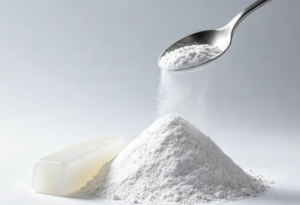
Liquid silicone rubber is commonly supplied as a two-component material that is mixed before processing and rapidly heat-cured. Its ability to flow through metering equipment, runners, and molds directly affects filling behavior and production consistency. Dow, for example, describes LSR as a two-part material suitable for liquid injection molding and highlights processing performance and cycle-time advantages.
For industrial formulators, the target is not simply the lowest possible viscosity. Excessive flow can create handling or molding challenges, while excessive viscosity can increase injection pressure and make complete mold filling more difficult. Rheological behavior therefore needs to be considered together with cure conditions, mold design, filler loading, and the required properties of the finished part.
How Silica Controls Rheology
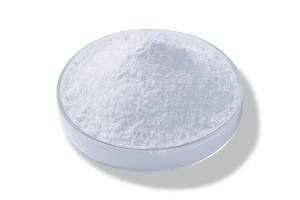
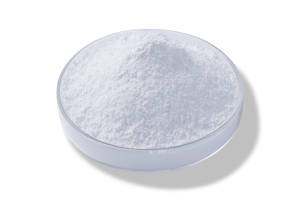
A silica filler for rubber can reinforce the silicone matrix while also influencing the viscosity of the uncured formulation. Specific surface area is particularly important. More available surface can increase interactions between silica and polymer chains, strengthening the filler network but potentially increasing viscosity.
Research on silicone systems shows that filler loading and silica characteristics can have a substantial effect on viscosity and yield behavior. Evonik’s technical data for LSR formulations, for example, shows viscosity rising as silica loading increases. This demonstrates why reinforcement targets and processing requirements should be evaluated together rather than optimized independently.
Oil absorption is another useful formulation parameter. It reflects how much liquid a silica structure can take up and can help indicate its structure and interaction with the surrounding polymer system. Particle size and morphology also matter because they affect surface interactions, dispersion, optical behavior, and the development of filler networks.
Balancing Surface Area and Flow
When developing a formulation, we begin by defining the processing window rather than selecting silica only from a single specification. A grade with very high surface area may offer strong reinforcement but can create an undesirable viscosity increase. A lower-surface-area material may improve flow but provide a different reinforcement level.
This balance is especially important when manufacturers need stable injection behavior across production batches. Consistent particle characteristics and dispersion can help reduce variation in rheological response. Evonik’s technical literature similarly identifies low viscosity and good flow as important requirements for uncured LSR processing.
The practical objective is a silica grade that supports the required mechanical performance without pushing viscosity beyond the capabilities of the dosing, mixing, and molding system. Formulators should therefore evaluate silica together with polymer grade, filler concentration, shear history, temperature, and cure package.
Using a Silica Filler for Rubber More Precisely
Our BACOSIL® silicone rubber series is designed around this formulation principle. We can adjust parameters such as oil absorption, specific surface area, and particle size according to production requirements. This allows customers to consider reinforcement and processability as connected targets instead of treating viscosity as an isolated problem.
Our precipitated silica is developed for silicone rubber applications including liquid silicone rubber. We focus on dispersibility and controlled material characteristics because uneven dispersion can change both rheological behavior and final mechanical properties. Our technical approach uses application requirements and process conditions to guide material selection.
For LSR applications, BACOSIL® grade selection should consider viscosity, dispersion, transparency, and mechanical performance. Any requirements for regulated end uses should be evaluated using the documentation for the specific silica grade and the applicable market requirements.
A Practical Approach to Viscosity Control
A useful development process starts with defining measurable targets: viscosity at relevant shear rates, acceptable yield behavior, filler loading, mechanical properties, and molding conditions. Testing should then compare candidate silica grades under the same formulation and mixing conditions so that differences can be attributed more reliably to the filler.
Dispersion deserves particular attention. Silica that is not uniformly distributed can produce inconsistent local structures, affecting viscosity and finished-part performance. Mixing energy and sequence should therefore be controlled during development. Once the formulation is established, incoming raw-material specifications and process controls should remain consistent to protect batch-to-batch stability.
It is also important to evaluate viscosity at conditions representative of production. Temperature changes can alter flow behavior, while different shear rates may produce different apparent viscosities. For this reason, a single viscosity number may not fully describe how a formulation will behave during metering or injection.
Designing the Formulation Around the Process
Viscosity control works best when material selection, formulation design, and equipment capability are considered together. A silica grade should be selected according to the desired reinforcement, flow characteristics, dispersion behavior, and final application rather than by surface area alone.
At JSJ Silica, we provide tailored silica solutions based on customer requirements. Our BACOSIL® materials offer adjustable characteristics for silicone rubber, while our technical team can evaluate formulation and process conditions to support grade selection. This approach helps manufacturers develop LSR systems that meet both performance specifications and practical production needs.
Building More Stable LSR Production
Effective viscosity control is ultimately a balancing exercise. Silica loading, surface area, oil absorption, particle characteristics, dispersion, and processing conditions all contribute to the behavior of an uncured silicone system. A well-selected silica can provide reinforcement without unnecessarily compromising flow, supporting more predictable molding and consistent finished-product quality.
For manufacturers seeking a silica filler for rubber, the most effective solution is rarely a universal grade. At JSJ Silica, we work with customers to match silica characteristics with their formulation and production process. By controlling the material variables that influence rheology, manufacturers can establish a more practical processing window while maintaining the reinforcement required for demanding silicone rubber applications.