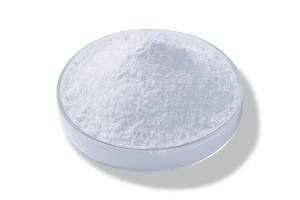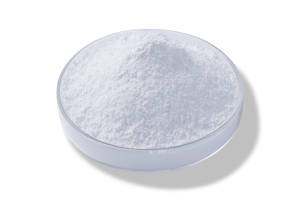
Silicone rubber is valued for flexibility, temperature resistance, durability, and stable mechanical performance, but the polymer alone does not determine the final behavior of a compound. Reinforcing fillers help build the structure that supports strength and deformation resistance. For compounders, choosing the right silica is therefore a formulation decision rather than simply a material substitution. A well-selected silica filler for rubber can influence tensile strength, tear resistance, hardness, modulus, and processing balance.
Why Reinforcement Matters in Silicone Rubber
Cured silicone rubber contains a polymer network together with fillers and other formulation components. WACKER notes that the nature, composition, and quantity of fillers have a crucial influence on both raw and cured rubber properties. Reinforcing silica interacts with the silicone matrix and contributes to a stronger elastic network, helping the finished material resist deformation under mechanical stress.
The reinforcement mechanism is closely related to silica surface characteristics. Synthetic silica carries surface silanol groups that can interact with the surrounding silicone system. Dispersion, filler loading, particle characteristics, and interactions within the compound all affect how effectively the filler contributes to reinforcement. This is why a silica filler for rubber should be selected according to the compound, processing method, and target properties rather than by surface area alone.
Improving Tensile Strength and Modulus
One major mechanical benefit of silica reinforcement is the ability to increase resistance to tensile deformation. When the filler is well dispersed, stress can be transferred more effectively through the filled polymer structure. This can raise tensile strength and modulus compared with an inadequately reinforced formulation.
For manufacturers of molded silicone components, modulus is particularly important because it affects how a part responds to applied force. Higher reinforcement can help a component maintain its shape and resist excessive deformation. However, maximizing filler loading is not automatically the best strategy. Compounders need to balance reinforcement against flexibility, elongation, processability, and the requirements of the finished part.
Supporting Tear Resistance and Durability
Tear resistance is another important mechanical consideration in silicone rubber, especially for parts exposed to repeated handling, stretching, edges, or localized stresses. Reinforcing fillers can improve the resistance of the cured elastomer to crack initiation and propagation when the filler-polymer structure is properly developed.
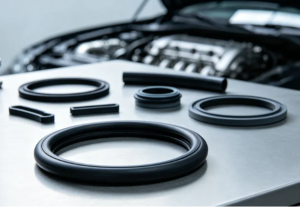
The practical target is not simply the highest possible strength. A formulation should maintain an appropriate combination of tensile properties, elongation, hardness, and tear resistance. This balance becomes especially relevant in seals, molded components, electrical parts, and other applications where dimensional integrity must coexist with elastic recovery.
How Silica Characteristics Affect Formulation
Particle size, specific surface area, and oil absorption are useful parameters when evaluating precipitated silica for silicone rubber. They influence how the silica behaves during mixing and how much interaction it can develop within the compound. Changes in these characteristics can therefore alter dispersion, compound viscosity, reinforcement efficiency, and the resulting mechanical profile.
Our BACOSIL® – Silicone Rubber range is developed around this formulation principle. We offer adjustable oil absorption values, specific surface areas, and particle sizes that can be tailored to a customer’s production process. This allows compound developers to consider the processing window and desired mechanical performance together, rather than treating filler selection as a one-parameter decision.
Balancing Mechanical Performance with Processing
A highly reinforcing filler must still be practical to incorporate. Poor dispersion can reduce the value of a silica and may create inconsistencies in the compound. Mixing conditions, filler characteristics, loading level, and the broader formulation all need to work together.
This makes precipitated silica for silicone rubber relevant to process development as well as final-property optimization. The right grade can support reinforcement while helping manufacturers manage the rheological and processing demands of their production equipment. For business buyers, consistency from batch to batch is equally important because it supports repeatable compound behavior and more stable manufacturing.
Selecting a Filler for Production Requirements
When evaluating a silica filler for rubber, compounders should define the required tensile strength, tear resistance, hardness, modulus, elongation, and processing behavior before selecting a grade. They should then assess how the silica’s physical characteristics align with the polymer, curing system, mixing equipment, and target application.
At JSJ Silica, we approach filler development around these practical requirements. As a silica manufacturer, we deliver tailored silica solutions for different industrial needs. Our BACOSIL® materials are designed as advanced silicone rubber fillers, with adjustable properties intended to match production conditions and performance objectives.
Building a More Controlled Silicone Rubber Formulation
Mechanical performance depends on the interaction of polymer, filler, curing chemistry, processing, and formulation design. Precipitated silica is therefore most valuable when its characteristics are matched carefully to the compound rather than selected in isolation. A suitable silica can contribute to tensile strength, modulus, tear resistance, hardness, and overall durability while supporting the processing requirements of the manufacturer.
For companies developing or refining silicone rubber compounds, precipitated silica for silicone rubber offers a practical route to controlled reinforcement. At JSJ Silica, we combine silica manufacturing expertise with adjustable BACOSIL® characteristics to support application-specific formulation work. By aligning filler properties with production requirements, we help customers pursue a more consistent balance between mechanical performance and processability.