Tire manufacturers are under increasing pressure to balance rolling efficiency, road grip, durability, and production efficiency within increasingly sophisticated rubber compounds. The filler system plays an important role in achieving this balance. Precipitated silica has become a key reinforcing material for tire tread compounds because, when properly dispersed and coupled with rubber, it can support low rolling resistance, wet grip, and wear performance.
Why Filler Dispersion Matters in Tire Compounds
Dynamic tire properties depend not only on the type of filler selected but also on how uniformly that filler is distributed throughout the rubber matrix. Poor dispersion can create agglomerates, weaken reinforcement, and interfere with the consistency of the compound. Research has identified high-quality macrodispersion as an important condition for achieving better abrasion resistance in silica-reinforced tire compounds.
This makes filler morphology and dispersibility important considerations for compound development. Silica has a polar surface that can interact strongly with itself, while many rubber polymers are comparatively nonpolar. As a result, silica dispersion can be challenging during mixing, which is one reason silane coupling systems are commonly incorporated into silica-filled rubber formulations.
For silica-filled tires, the practical objective is not simply to increase filler loading but to achieve suitable dispersion and reinforcement while maintaining the required viscoelastic properties of the rubber compound. The formulation needs to create a sufficiently uniform reinforcing network while preserving the viscoelastic behavior required during tire operation.
How White Carbon Black Influences Dynamic Tire Performance
The term white carbon black is commonly used for precipitated silica in industrial applications. In tire compounds, silica has attracted significant attention because it can contribute to the balance between rolling resistance, wet traction, and abrasion resistance. This performance balance is often described as the tire industry’s “magic triangle.”
Rolling resistance is strongly related to energy dissipation within the tire as it repeatedly deforms and recovers. Silica-based tread compounds can reduce energy loss at rolling frequencies, while maintaining favorable behavior associated with wet traction. This makes silica particularly valuable when tire manufacturers are seeking improved efficiency without simply sacrificing road performance.
At the same time, silica reinforcement can contribute to mechanical properties such as wear and tear resistance. The final result depends on the complete formulation, including polymer selection, silica characteristics, silane coupling, mixing conditions, and curing. Consequently, filler selection should be evaluated as part of the overall compound design rather than in isolation.
High Dispersibility Supports More Consistent Reinforcement
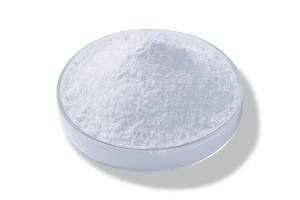
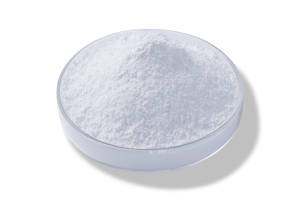
Our TIRESIL 165MP is designed around high dispersibility, high reinforcement, and a micro-pearl form. Its high-dispersibility characteristics allow the silica to distribute more evenly within tire rubber, supporting the development of compounds with improved wear resistance and skid resistance while helping reduce rolling resistance.
For tire manufacturers, dispersion also has implications for processing. TIRESIL 165MP requires lower energy during mixing, supporting smoother compounding of rubber tire materials and helping manufacturers pursue greater production efficiency. This processing advantage can be particularly relevant when compounders are optimizing mixing cycles and seeking consistent filler distribution.
The importance of dispersion is supported by research showing that silica dispersion and filler-rubber interaction are fundamental to reinforcement performance. Better dispersion can reduce the formation of large silica clusters and create a more effective reinforcing structure throughout the rubber matrix.
Reinforcement for Wear, Tear, and Skid Resistance
Dynamic properties cannot be separated from the mechanical durability expected from a finished tire. Tread compounds must withstand repeated deformation, friction, temperature changes, and road contact. A reinforcing filler therefore needs to contribute to mechanical strength without creating an unfavorable compromise elsewhere in the compound.
Our TIRESIL 165MP is developed to enhance tear resistance, anti-slip performance, and wear resistance while supporting low rolling resistance requirements. Its high-reinforcement characteristics make it suitable for manufacturers developing performance-oriented rubber compounds where durability and dynamic behavior need to work together.
For silica-filled tires, this balance becomes especially relevant when manufacturers target specialized or customized tire compounds. The reinforcement system must remain compatible with the selected polymer and processing approach, while the final compound must deliver the required combination of mechanical and dynamic properties.
Supporting More Efficient Tire Manufacturing
Material performance is only one part of the business equation. Tire producers must also consider mixing energy, compound consistency, throughput, and manufacturing stability. A silica grade that disperses efficiently can help simplify processing while supporting the performance targets of the final rubber compound.
This is one reason we emphasize the high-dispersibility characteristics of TIRESIL 165MP. Its micro-pearl form and processing behavior are intended to facilitate incorporation into tire rubber, while its reinforcing function supports demanding performance requirements.
As manufacturers continue developing lower-rolling-resistance tires, white carbon black remains an important material option. Research and industrial development continue to focus on improving silica dispersion and silica-rubber interaction because these factors influence the final balance of wet grip, rolling resistance, and abrasion performance.
Advancing Dynamic Performance Through Better Filler Selection
Improving tire dynamics requires a coordinated approach to filler selection, polymer design, coupling chemistry, mixing, and curing. Silica has demonstrated its value because it can contribute to several important tire characteristics simultaneously, although achieving the desired balance depends heavily on formulation and processing conditions.
At JSJ Silica, we provide silica solutions for manufacturers seeking greater control over these performance variables. With TIRESIL 165MP, we focus on high dispersibility and reinforcement to support wear resistance, tear resistance, skid resistance, and low rolling resistance in demanding tire applications.
For manufacturers evaluating white carbon black for advanced tire compounds, selecting a silica grade with suitable dispersion and reinforcement characteristics can be an important step toward more consistent dynamic performance. Through appropriately designed materials and formulation strategies, silica-filled tires can be developed to meet increasingly demanding requirements for efficiency, durability, and road performance.