A cosmetic formula is judged not only by appearance or performance, but also by how it feels during application. Powder smoothness, slip, dryness, and after-feel can influence whether a product is perceived as refined and comfortable. For formulators, controlling these sensory properties requires careful selection of functional ingredients. Silica is particularly useful because its physical characteristics can influence oil management, powder flow, texture, and formulation stability.
Why Tactile Performance Matters in Cosmetic Formulation
Consumers often evaluate makeup and personal care products through immediate sensory cues. A face powder that spreads evenly and feels light may create a different experience from one that drags or leaves an overly greasy residue. These differences are closely connected with particle characteristics and how an ingredient interacts with the rest of the formula.
Silica in cosmetics can contribute to a more controlled sensory profile by absorbing excess oil and influencing the structure of powder-based formulations. The Cosmetic Ingredient Review has assessed silica and related silicate ingredients used in cosmetics, including functions such as absorbents, abrasives, and bulking agents. This makes silica relevant to both formulation performance and tactile design.
How Silica Supports a Smoother Sensory Experience
Particle characteristics are important when formulators want to achieve consistent application. Uniform particles can help create more predictable distribution throughout a formulation, while surface characteristics can affect interactions with oils and other ingredients.
Additionally, silica’s light-scattering properties can create a mattifying effect and a soft-focus blur effect, helping reduce the visual appearance of skin imperfections and produce a smoother-looking complexion.
For powder cosmetics, silica in cosmetics can help manage excess sebum and contribute to a dry, less greasy skin feel. In creams and emulsions, suitable silica grades may also influence viscosity and stability. The goal is not simply to add a powder, but to select a material whose characteristics complement the complete formulation.
The Importance of Choosing the Right Grade
Not every silica material will produce the same sensory result. Particle size distribution, surface properties, purity, and processing characteristics can all affect how a finished cosmetic feels and performs. Formulators therefore need to consider the intended application before selecting a grade.
For businesses developing multiple product categories, working with a manufacturer that offers tailored silica solutions can simplify this process. Technical discussions can focus on the desired flow, oil absorption, texture, and stability rather than treating silica as a one-size-fits-all ingredient.
FOMESIL® for Cosmetics and Personal Care
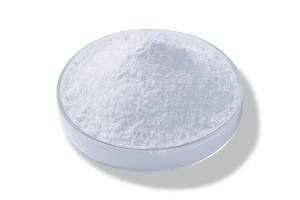
We developed FOMESIL® precipitated silica for applications where functional performance and sensory quality need to work together. Our material features high whiteness, uniform particle sizes, and low dust generation, providing characteristics suited to food, supplement, and personal care formulations.
FOMESIL® is designed for food, pharmaceutical, and cosmetic applications where material consistency and functional performance matter. Its documented product characteristics include high whiteness, uniform particle size distribution, stable physical and chemical properties, and functions such as oil control, anticaking, suspension support, and thickening. Precipitated silica is particularly effective in managing excess oil and improving powder flow and formulation stability.
However, achieving the silky or velvety sensory feel expected in premium color cosmetics can be challenging with precipitated silica alone and may require complementary ingredients or additional formulation adjustments. Suitability for a specific cosmetic formulation should be confirmed through product documentation and application testing.
Quality Considerations for business Cosmetic Manufacturers
For commercial buyers, selecting silica in cosmetics also requires attention to batch-to-batch consistency. Ingredient consistency is particularly important for manufacturers producing cosmetics at commercial scale. Variations in raw materials can affect processing behavior, appearance, and the sensory properties of finished products. Quality control therefore needs to cover more than basic material identity.
We support our quality management with DCS automated systems and a CNAS-certified quality control system. We also follow strict food safety standards for applicable materials. For customers evaluating materials across different applications, this systematic approach provides a stronger foundation for consistent formulation development.
Separating Cosmetic and Food Applications
The same chemical substance may serve different functions depending on its grade, formulation, and intended use. For example, silicon dioxide food additive applications are regulated for specific food uses, with the U.S. FDA identifying silicon dioxide as an anticaking or free-flow agent among other permitted technical effects. Cosmetic applications require their own ingredient and safety considerations.
This distinction matters for procurement teams evaluating a silicon dioxide food additive across product categories. A silicon dioxide food additive should not automatically be treated as interchangeable with a cosmetic grade. Beyond basic chemical specifications, buyers should compare heavy metal limits, including lead, arsenic, mercury, and nickel, as well as microbiological limits for relevant microorganisms. These requirements may vary considerably according to the intended cosmetic application, particularly for products used around the eyes, lips, or other mucosal areas.
Regulatory frameworks and safety guidance, including EU Scientific Committee on Consumer Safety (SCCS) assessments and China’s Safety and Technical Standards for Cosmetics, provide important references for evaluating ingredient safety and compliance. Formulators should verify the applicable specifications, intended use, regulatory requirements, and supplier documentation before selecting a material.
Designing Texture Around the Complete Formula
Sensory performance cannot be attributed to silica alone. Oils, waxes, pigments, binders, emulsifiers, and other functional ingredients all contribute to the final tactile experience. The appropriate silica level and grade should therefore be determined through formulation testing.
We work with customers to provide tailored silica materials for diverse industrial needs. By considering the complete formulation and its processing requirements, manufacturers can better evaluate whether a material provides the desired balance of spreadability, oil control, texture, and stability.
A Practical Approach to Better Tactile Results
Developing a successful cosmetic formulation requires a balance between sensory expectations and technical performance. Silica can contribute to this balance when its characteristics are matched carefully with the application. For manufacturers, the selection process should consider particle properties, consistency, regulatory suitability, and technical support.
Our FOMESIL® range is designed to support these practical formulation requirements, from sebum control and silky textures to viscosity adjustment and emulsion stabilization. With manufacturing expertise and customer-oriented support, we at JSJ Silica aim to help cosmetic businesses develop more consistent and refined products while selecting materials according to their specific formulation goals.