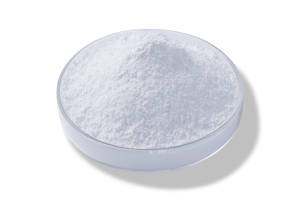
Global food, supplement, and personal care manufacturers increasingly need ingredient systems that satisfy both technical specifications and religious dietary requirements. Silicon dioxide is recognized internationally as a multifunctional additive, including anti-caking, carrier, and related uses. For procurement and quality teams, however, compliance involves more than the chemical identity of an ingredient. We focus on controlled sourcing, documented production, and recognized certification for applications requiring reliable silicon dioxide food grade materials.
Why Compliance Requires More Than Ingredient Selection
Silicon dioxide, amorphous, is listed by JECFA under INS 551, while the U.S. FDA identifies silicon dioxide as an approved food additive under applicable regulations. Its technological functions include use as an anti-caking or free-flow agent. These regulatory references establish permitted uses and specifications, but they do not automatically establish Halal or Kosher status for every supplier or production site.
For business buyers, the distinction is important. Religious compliance can depend on raw-material sources, processing aids, production equipment, storage, and handling practices. A technically compliant ingredient may still require additional documentation or certification before it can be accepted into a certified finished product.
Building a Traceable Halal Supply Chain
Halal assessment examines the complete manufacturing chain rather than relying only on a product name. The Halal Food Council USA describes reviews covering raw materials, formulas, production facilities, handling, and assurance systems. Cross-contamination control is also part of the certification process, making supplier documentation an important element of procurement qualification.
When evaluating a silicon dioxide food additive, buyers should therefore request current certification, product specifications, raw-material information, and relevant manufacturing documentation. These records help quality teams establish traceability and provide evidence during customer or certification audits.
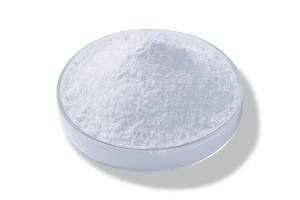
We support this approach by providing FOMESIL® precipitated silica with Halal certification. Our documentation is designed to help customers assess material suitability while maintaining a clear connection between product specifications and compliance requirements.
Understanding Kosher Requirements Across Production
Kosher certification similarly extends beyond the chemical identity of an ingredient. The Orthodox Union explains that both ingredients and production processes are reviewed, including equipment and facilities. Processing aids and other substances with intentional product contact can also require approval.
This makes manufacturing controls particularly important for industrial ingredient suppliers. Changes to raw materials, suppliers, equipment, or production processes may affect certification status and should be managed through documented procedures and appropriate certification oversight.
For customers sourcing silicon dioxide food grade, a current Kosher certificate can simplify supplier qualification, especially when the ingredient will enter a complex formulation containing numerous other components. We maintain Kosher certification for FOMESIL® precipitated silica, giving customers an established compliance reference for relevant applications.
What Food Manufacturers Should Verify Before Purchasing
A practical qualification process should begin with identity and regulatory status. JECFA identifies amorphous silicon dioxide as INS 551 and publishes specifications covering the additive. The FDA likewise lists silicon dioxide among substances used for functions including anti-caking and free-flow applications. Buyers should confirm that the offered grade and intended application match applicable requirements. In addition to Halal and Kosher certification, manufacturers should verify heavy metal and contaminant limits, particularly for lead (Pb), arsenic (As), mercury (Hg), and cadmium (Cd). These levels should comply with the relevant food-grade specifications, such as the Food Chemicals Codex (FCC) or applicable European Union requirements.
Next, procurement and quality teams should review certification scope and validity. Halal and Kosher certificates should correspond to the actual product, manufacturing site, and certification body. Documentation should also be controlled when formulations, suppliers, or processes change.
Finally, manufacturers should examine physical and functional characteristics. Particle-size distribution, whiteness, bulk density, absorption behavior, and dust generation can influence handling and formulation performance. Compliance should therefore be evaluated together with technical suitability rather than treated as a separate purchasing criterion.
FOMESIL® Supports Functional and Compliance Requirements
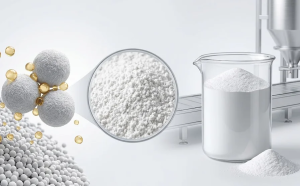
Our FOMESIL® precipitated silica is developed for food, supplement, and personal care formulations where flowability, stability, and texture matter. High whiteness and uniform particle sizes support consistent material handling, while low dust generation can make industrial processing more manageable.
The material also provides anti-caking and free-flow functionality, helping reduce caking, bridging, and lumping during processing and storage. Its absorption capability can help convert liquid nutrients and oils into stable powders, while high bulk density supports lower-dust handling.
For manufacturers evaluating a silicon dioxide food additive, these functional characteristics can be considered alongside documented compliance. FOMESIL® carries ISO, Halal, Kosher, and REACH-related certifications and compliance information, supporting customers that serve markets with multiple regulatory and market-access expectations.
Creating a More Reliable Compliance Strategy
Halal and Kosher compliance should be integrated into supplier qualification, quality management, and change-control procedures from the beginning. Purchasing teams can reduce uncertainty by requesting complete documentation before approving an ingredient and by confirming that certification remains valid throughout the supply relationship.
We combine tailored silica development with certification and technical documentation to support customers across food and related industries. For applications requiring silicon dioxide food grade materials, this combination helps procurement teams evaluate both performance and compliance through a single supplier relationship.
A Practical Path to Certified Ingredient Sourcing
Reliable religious compliance depends on traceability, controlled manufacturing, appropriate certification, and ongoing communication. Regulatory recognition of silicon dioxide provides an important technical foundation, but Halal and Kosher requirements require their own documented assessment.
JSJ Silica offers FOMESIL® precipitated silica for selected food, pharmaceutical, and cosmetic applications. Customers should evaluate the relevant grade’s functional properties, applicable product specifications, certification documents, and market-specific requirements before approving it for use in a finished formulation.