Tire development is increasingly centered on achieving several performance targets at once. Manufacturers need compounds that can deliver low rolling resistance, reliable wet grip, long wear life, and consistent processing. This challenge has made filler technology a central part of modern formulation strategies. As tire material composition evolves, precipitated silica combined with suitable coupling technology offers compounders a way to adjust performance without treating efficiency, safety, and durability as completely separate goals.
Why Tire Material Composition Is Changing
The tread is one of the most performance-critical parts of a tire because its compound directly affects energy dissipation, traction, and wear. Historically, carbon black played a major reinforcing role, but modern silica/silane systems have expanded the available formulation options. Research and industrial experience show that combining silica and carbon black in a hybrid filler system can help reduce rolling resistance while improving wet traction and maintaining good abrasion performance. Rather than completely replacing carbon black, modern tire formulations, particularly those developed for electric vehicles (EVs), often use both reinforcing fillers to balance their complementary properties.
For tire manufacturers, this development is not simply about choosing one filler over another. A modern tire material composition must be designed around the interaction between polymers, reinforcing fillers, coupling agents, and processing conditions. The objective is to control the compound’s dynamic behavior while preserving the mechanical properties required throughout the tire’s service life.
The Role of Silica in Tires
The growing use of silica in tires is closely connected with the industry’s effort to balance the so-called Magic Triangle: rolling resistance, wet grip, and abrasion resistance. Silica can contribute to lower energy dissipation in appropriately formulated tread compounds, while its interaction with silane coupling agents supports effective bonding between the filler and rubber matrix.
This chemistry is important because silica is polar while many rubber polymers used in tire compounds are comparatively non-polar. A bifunctional silane can react with the silica surface and subsequently interact with the rubber during vulcanization, creating a stronger connection between otherwise less compatible materials. The resulting filler system can therefore contribute to both dynamic and mechanical performance.
Improving Rolling Resistance Without Ignoring Grip
Rolling resistance represents energy lost as a tire continuously deforms and recovers during operation. Reducing this loss can improve vehicle efficiency. For electric vehicles, this consideration is particularly relevant because lower rolling resistance can contribute to extending driving range, while conventional vehicles can benefit through reduced fuel consumption.
However, lowering rolling resistance alone does not create a successful tire. Wet traction remains essential for braking and handling, while excessive compromise in abrasion resistance can shorten service life. The value of silica in tires lies partly in its ability, when properly formulated with silane and other compound components, to help address these competing requirements simultaneously.
Designing for Dispersion and Reinforcement
Filler dispersion is another important consideration when modernizing a compound. Agglomerated silica can make processing more difficult and limit the effectiveness of the filler. Highly dispersible grades have therefore become important for tire manufacturers seeking consistent incorporation and efficient mixing.
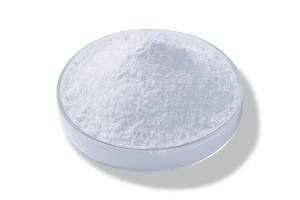
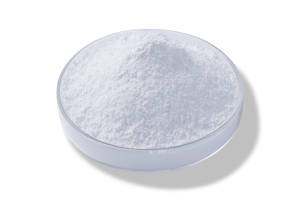
Our TIRESIL precipitated silica is designed around these formulation demands. We provide a high-purity, odorless white powder that functions as a reinforcing filler in modern tire compounds. Its formulation advantages include optimized dynamic properties and characteristics intended to balance rolling resistance, wet grip, and wear resistance.
Controlling Dynamic Properties
Dynamic mechanical behavior provides useful insight into how a tread compound responds under different operating conditions. Our TIRESIL range is designed to support this balance through specific silica characteristics. High-dispersion silica can lower 60°C tanδ, supporting lower rolling resistance, while an optimized silanol and mesopore structure can raise 0°C tanδ, supporting wet grip.
The goal is not to maximize one measurement independently. Instead, modern tire material composition requires coordinated control of multiple properties. A formulation that delivers efficient energy behavior while maintaining traction and durability can provide a more practical solution for passenger vehicles, commercial applications, and increasingly demanding electric vehicles.
Reinforcement and Processing Efficiency
Mechanical reinforcement also depends on how effectively silica is incorporated into the rubber matrix. Our TIRESIL specifications include a high CTAB/BET ratio intended to reduce hard agglomerates. This supports reinforcement characteristics associated with modulus, tensile strength, abrasion resistance, and flex fatigue performance.
Processing behavior must also be considered alongside final properties. The micro-pearl (granular) form of TIRESIL offers additional handling and processing advantages, including reduced dust generation, less material buildup during storage and handling, and improved feeding consistency. Its granulated structure can facilitate faster silica incorporation into internal mixers, helping compound manufacturers improve powder feeding efficiency and optimize mixing operations. A low Payne effect can support easier dispersion, a wider processing window, and more consistent silane coupling.
Together, suitable silica morphology and dispersion characteristics can support more efficient silanization and improve the consistency of rubber compounding. For compound developers, this can help make the transition from laboratory formulation to industrial production more predictable, particularly when filler loading and mixing conditions must remain tightly controlled.
A Practical Direction for Tire Innovation
The continued development of silica in tires reflects a broader change in how tire materials are engineered. Instead of optimizing individual properties independently, manufacturers increasingly need filler systems that help coordinate efficiency, traction, wear, reinforcement, and processing. These requirements become even more demanding in electric vehicle (EV) tires. Battery packs increase vehicle weight, while electric motors deliver high torque almost instantly. As a result, EV tire compounds must withstand greater loads and more demanding acceleration conditions, placing increased emphasis on tear resistance and wear life under high-torque driving conditions. This systems-based approach is especially relevant as electric and conventional vehicles place different demands on tire compounds.
At JSJ Silica, we support this direction through our TIRESIL precipitated silica for tires. As a silica manufacturer, we focus on tailored material solutions that help compound developers address specific formulation requirements. For EV-specific tire development, reinforcement and dispersion characteristics are particularly important because the compound must help resist tread damage and maintain wear performance under higher vehicle loads and instant torque delivery. By combining controlled silica characteristics with appropriate rubber and silane systems, manufacturers can develop a tire material composition better aligned with today’s requirements for safety, efficiency, durability, and production consistency.