Toothpaste manufacturers face a demanding procurement challenge: every ingredient must support formulation performance while meeting safety, consistency, and regulatory expectations. For buyers, evaluating raw materials in toothpaste therefore requires more than comparing prices or certificates. Abrasivity, particle characteristics, purity, microbiological quality, stability, and formulation compatibility all deserve attention, especially when selecting silica for different oral-care products.
Define the Functional Role Before Purchasing
Toothpaste procurement specifications should identify the applicable dentifrice standards and test methods, together with the requirements for abrasivity, pH, microbiological quality, stability, fluoride, and relevant impurities. Buyers should verify the current standard edition and its scope before using it as a qualification benchmark.
For procurement teams, specifications should be connected to the intended formulation. A whitening toothpaste may require different abrasive behavior from a sensitive-care product, while a gel or paste may place greater emphasis on rheology and extrusion. Defining the application first helps buyers avoid selecting a material solely from a generic specification sheet.
Evaluate Hydrated Silica in Toothpaste for Abrasivity
Abrasivity deserves particular attention when evaluating hydrated silica in toothpaste because toothpaste must remove deposits and surface stains without creating unacceptable wear. Relative Dentin Abrasivity (RDA) provides a standardized way to quantify dentifrice abrasivity, and dentifrices at or below 250 RDA are generally regarded as safe and effective under widely referenced criteria.
However, the finished toothpaste—not an isolated ingredient—determines the final abrasivity profile. Raw-material buyers should therefore request relevant test data and understand how particle characteristics affect the finished formulation. This approach is more meaningful than treating a single particle-size figure as a universal indicator of cleaning performance.
Check Particle Uniformity and Formulation Behavior
Particle-size distribution and structure can influence dispersion, texture, viscosity, and the sensory character of a toothpaste. Consistency from batch to batch is equally important because variations in raw materials can translate into changes in processing or finished-product behavior.
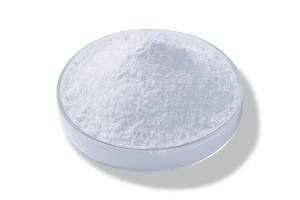
Our ORASIL® Oral Care Toothpaste Silica is engineered with controllable parameters and a uniform particle size distribution. We develop grades for different functional requirements, including abrasive systems, thickening, and functional carrier applications. This allows procurement and formulation teams to evaluate a material according to its intended role rather than relying on a one-size-fits-all approach.
Verify Purity, Documentation, and Quality Controls
Quality assurance should extend beyond physical performance. Buyers should establish requirements for chemical purity, elemental impurities, microbiological control, batch traceability, packaging, and supporting documentation. ISO 11609:2026 specifically includes elemental impurities, microbiology, stability, and other physical and chemical properties within its dentifrice framework.
For manufacturers selling across markets, documentation also supports internal quality management and customer audits. At JSJ Silica, our quality commitment is supported by DCS automated systems and a CNAS-certified quality control system. Our R&D organization includes PhDs, Masters, and experienced engineers who work in application-focused teams to support industrial silica development.
Evaluate Rheology and Processing Performance
The purchasing decision should also consider how a silica grade behaves during manufacturing. A toothpaste ingredient may need to help build a stable matrix, control viscosity, reduce water loss, and support smooth extrusion. These properties directly affect filling, packaging, consumer handling, and product consistency.
Our ORASIL® silica portfolio includes grades designed as toothpaste thickeners, supporting cohesive formulation structures and clean extrusion. For formulators, evaluating rheology should involve the complete system, including humectants, binders, surfactants, water content, active ingredients, and processing conditions. Supplier collaboration can help determine whether a selected grade delivers the required balance.
Match Material Selection to Product Positioning
Different oral-care claims create different formulation priorities. ADA information notes that toothpaste may contain ingredients for cavity protection, sensitivity, gingivitis, tartar control, enamel-related needs, or cosmetic effects such as whitening. This diversity means procurement teams should align silica selection with the intended product concept and consumer use.
For example, sensitive-care formulations may prioritize a gentler cleaning profile, while whitening products may require stronger stain-removal performance. A functional carrier may also be needed when a formulation uses specialized active ingredients. ORASIL® colored particles can additionally support customized visual and sensory effects where the formulation concept calls for them.
Build a Supplier Qualification Checklist
A practical supplier assessment should combine technical, quality, and commercial criteria. Buyers can request product specifications, certificate-of-analysis parameters, relevant test methods, sample evaluation, change-control procedures, and batch consistency data. Production capacity, lead times, packaging formats, and technical support should also be considered before approval.
When comparing raw materials in toothpaste, procurement teams should avoid evaluating cost per kilogram in isolation. A material that requires fewer formulation adjustments, delivers stable processing, and maintains consistent finished-product performance may provide greater overall value. Supplier responsiveness during qualification and scale-up is another important consideration for long-term sourcing.
Establish a Reliable Benchmark for Long-Term Supply
Selecting raw materials in toothpaste is ultimately a cross-functional decision involving procurement, R&D, quality, regulatory, and production teams. The strongest benchmark connects measurable material properties with the performance required in the finished dentifrice.
We support this approach through tailored silica solutions for oral-care formulations. Our ORASIL® range is designed around controllable parameters and uniform particle distribution, with options for abrasive, thickening, and carrier functions. By combining application-focused R&D with controlled quality systems, we help customers assess hydrated silica in toothpaste against practical formulation requirements rather than relying on price or generic specifications alone.