Toothpaste manufacturers must balance effective stain removal with controlled abrasivity, especially when developing products for daily brushing. For formulators, evaluating the cleaning contribution of abrasive silica requires more than looking at particle hardness or abrasive strength alone. Pellicle Cleaning Ratio (PCR) offers a useful way to assess cleaning performance, while RDA helps characterize dentin abrasivity. Understanding both measurements can support better raw-material selection and more balanced toothpaste formulations.
What PCR Reveals About Toothpaste Cleaning
PCR, or Pellicle Cleaning Ratio, evaluates how effectively a dentifrice removes an artificial stain or pellicle from a tooth surface under standardized brushing conditions. Research has shown that toothpaste cleaning performance can vary considerably between formulations, even when their abrasive systems appear similar. This makes PCR valuable when comparing materials intended to deliver visible cleaning benefits.
PCR should not be interpreted as a simple measure of how abrasive a toothpaste is. Earlier research found only a limited relationship between cleaning power and dentin abrasion, because particle characteristics and other formulation ingredients can influence stain removal independently. Therefore, a higher abrasive level does not automatically mean proportionally better cleaning.
For manufacturers, this distinction is commercially important. Excessive abrasivity may create an undesirable formulation profile, while insufficient cleaning performance can make a product less attractive for consumers seeking effective removal of extrinsic stains. The objective is therefore to establish an appropriate balance between cleaning efficiency, surface compatibility, formulation stability, and sensory performance.
How Abrasive Silica Influences PCR and RDA
Particle characteristics play an important role in toothpaste performance. Studies of hydrated silica-containing formulations have shown that increasing abrasive silica concentration can increase measured RDA, although the relationship is not necessarily linear. Particle size, shape, aggregation, concentration, and the surrounding formulation can all affect the resulting abrasivity.
This is why abrasive silica should be evaluated as part of the complete formulation rather than as an isolated ingredient. The same nominal ingredient category can produce different cleaning and abrasion profiles depending on its physical characteristics and dosage. For R&D teams, evaluating PCR alongside RDA can provide complementary information on stain removal and dentin abrasivity, but both measurements should be interpreted in the context of the complete toothpaste formulation and its intended use.
ISO 11609:2026 recognizes dentifrice abrasivity as an important physical property and includes methods for determining dentine and enamel abrasivity. The standard demonstrates why toothpaste development requires controlled evaluation rather than relying solely on descriptive claims such as “strong cleaning” or “mild abrasion.”
Selecting Abrasive Silica for Toothpaste Formulation
When selecting abrasive silica for toothpaste, formulators should consider several performance parameters simultaneously. These include particle-size distribution, cleaning efficiency, abrasivity, transparency, compatibility with fluoride and other ingredients, and the rheological contribution to the finished paste.
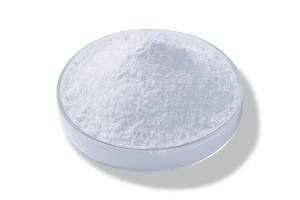
Our ORASIL® 114 is developed around this balanced formulation approach. It offers high whiteness and a uniform particle-size distribution, supporting consistent formulation behavior. It also offers at least 90% fluoride compatibility, a relevant consideration when developing fluoride-containing toothpaste formulations.
The grade provides medium abrasive cleaning ability while maintaining high transparency. This combination can be valuable for toothpaste manufacturers seeking a clear or visually transparent formulation without sacrificing the mechanical cleaning function expected from an abrasive system.
Compatibility with other toothpaste components is another practical consideration. ORASIL® 114 is designed to work well with components such as flavor, helping formulators manage the interaction between the abrasive phase and other ingredients during product development.
Connecting Cleaning Performance With Formulation Economics
Technical performance is only one part of commercial toothpaste development. Raw-material efficiency, water management, viscosity, and total formulation cost can influence whether a particular silica grade is suitable for large-scale production.
ORASIL® 114 provides medium-high viscosity and can increase the water content of the formula. This can help reduce formulation costs by allowing manufacturers to optimize the balance between silica, water, and other formulation components. Such characteristics may be particularly useful when cost efficiency needs to be considered alongside transparency and cleaning performance.
Building a Better PCR-to-Abrasivity Evaluation
A practical development program should not rely on PCR alone. Manufacturers can first establish the target cleaning performance, then compare candidate silica grades under controlled formulation conditions. RDA and, where appropriate, enamel abrasivity measurements can provide additional information about the surface effects of the complete toothpaste.
The formulation should also be evaluated under consistent conditions because changes in abrasive concentration, water level, thickening agents, and other components can influence measured performance. Research has demonstrated that increasing hydrated silica concentration can change RDA even when other formulation characteristics are controlled.
Making Silica Selection More Practical for Manufacturers
For toothpaste producers, the most useful evaluation is ultimately one that connects laboratory data with the requirements of the finished product. PCR can help assess cleaning efficiency, while RDA and related measurements help characterize abrasivity. Formulation compatibility and processing behavior then determine whether the selected silica can work effectively at production scale.
At JSJ Silica, we offer ORASIL® 114 for toothpaste developers seeking to balance abrasive cleaning, transparency, and formulation properties. Manufacturers should validate its compatibility and performance in the finished product using appropriate laboratory tests. For manufacturers evaluating abrasive silica for toothpaste, these characteristics provide a practical starting point for developing formulations that balance cleaning performance, appearance, formulation flexibility, and cost efficiency.
A Balanced Route to Toothpaste Performance
PCR efficiency is best understood as part of a broader toothpaste performance profile. Cleaning effectiveness, dentin and enamel abrasivity, particle characteristics, transparency, viscosity, ingredient compatibility, and cost can all influence the final formulation. By assessing these factors together, manufacturers can make more informed raw-material decisions and avoid equating stronger abrasion with better cleaning.
At JSJ Silica, we focus on this balanced approach when developing silica solutions for toothpaste applications. With ORASIL® 114, we combine medium abrasive cleaning performance with high transparency, high fluorine compatibility, and viscosity contribution, giving formulators a silica option designed around both technical performance and commercial formulation needs.