Daily brushing does more than deliver fluoride or freshen breath. For toothpaste manufacturers, it is also a controlled mechanical process in which abrasive particles help loosen and remove extrinsic stains deposited on tooth surfaces. Silica is especially useful because its abrasive behavior can be engineered for different cleaning targets. Research shows that stain removal and abrasivity are related, but not perfectly proportional, making material selection important for formulation performance.
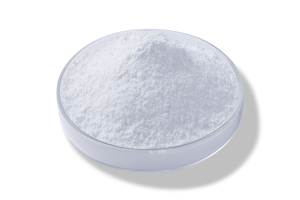
Why Abrasive Silica Matters for Stain Removal
Extrinsic stains can develop when pigments from foods, beverages, tobacco, and other sources accumulate on the tooth surface. An abrasive toothpaste helps remove these deposits through contact between abrasive particles, the tooth surface, and the toothbrush. The objective is not simply to maximize friction. Formulators need sufficient cleaning action while controlling potential wear.
RDA, or Relative Dentin Abrasivity, is a standardized measure used to characterize dentifrice abrasivity. The dentifrices with an RDA of 250 or below are considered safe and effective under its criteria. RDA should not, however, be treated as a direct ranking of toothpaste safety. This makes controlled silica selection valuable when developing a targeted whitening formula.
PCR, or Pellicle Cleaning Ratio, provides another useful perspective because it evaluates cleaning performance against a reference. Studies of commercial dentifrices have found substantial variation in both RDA and PCR, while hydrated silica appears frequently among formulations with different cleaning and polishing profiles. For product developers, considering both measurements can provide a more complete view than relying on abrasivity alone.
Balancing Cleaning Power and Tooth Surface Protection
A successful whitening formulation must distinguish surface stain removal from changing the intrinsic color of teeth. Abrasives primarily address extrinsic discoloration through mechanical cleaning. This is why a high-performance hydrated silica can be valuable in formulations designed for visible cleaning and whitening positioning without implying that abrasion alone changes natural tooth color.
The relationship between abrasive loading and performance also requires attention. Research on model toothpaste systems found that increasing hydrated silica content increased measured abrasiveness, demonstrating why particle characteristics and formulation levels need to be evaluated together. Manufacturers therefore need to optimize the entire system rather than simply adding more abrasive material.
For an abrasive toothpaste, particle design can influence how effectively the formulation interacts with deposits during brushing. Consistency in raw-material characteristics also matters for batch-to-batch production, because variations can affect cleaning behavior, rheology, processing, and consumer experience.
Where Hydrated Silica Supports Whitening Formulas
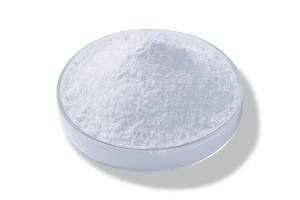
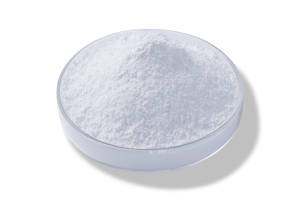
When developing hydrated silica teeth whitening products, manufacturers often need a material that combines meaningful cleaning performance with formulation compatibility. Our ORASIL® portfolio is designed for oral-care applications where silica can function as an abrasive, thickener, or functional carrier. We use controlled parameters and uniform particle-size distribution to support consistent formulation development.
ORASIL® 107T is particularly positioned for high abrasive cleaning and whitening applications. According to its product specifications, it has an RDA value of 180–220 and a PCR value of 110–130, supporting high abrasive cleaning ability. Its light transmittance is ≥70%, giving the material a high-transparency profile that can be relevant to toothpaste aesthetics.
For toothpaste manufacturers developing hydrated-silica-based whitening formulations, ORASIL® 107T is recommended at a use level of 10%–20% in combination with thickening silica, subject to validation in the finished formula. This approach allows the abrasive component and thickening component to perform complementary formulation roles instead of relying on one silica grade for every requirement.
Transparency, Texture, and Overall Formula Design
Cleaning performance is only one part of a commercial toothpaste specification. Consumers also notice appearance, consistency, mouthfeel, dispensing behavior, and the visual uniformity of the finished paste. These attributes must be considered alongside cleaning targets because changing one ingredient level can influence formula balance.
Our ORASIL® oral-care solutions cover different cleaning levels, consistency requirements, and transparency needs. We can therefore approach silica selection according to the desired formulation profile rather than treating every toothpaste as an identical application. This is particularly relevant when a whitening formula must combine cleaning performance with a visually appealing finished product.
Formulation teams should also validate interactions with other toothpaste ingredients, including fluoride systems, flavors, humectants, binders, and surfactants. The toothpaste evaluation involves more than abrasivity, including considerations such as fluoride availability and release for fluoride toothpastes. Silica should therefore be evaluated as part of the complete formulation.
Turning Silica Selection into Better Product Development
For business toothpaste manufacturers, silica selection is ultimately a formulation engineering decision. RDA and PCR provide useful performance indicators, while transparency, particle characteristics, dosage, and compatibility affect the finished product. A well-selected abrasive can help remove extrinsic stains without making maximum abrasivity the sole development objective.
At JSJ Silica, we focus on providing oral-care silica solutions that help formulators match material characteristics with toothpaste requirements. With ORASIL® 107T, we offer a high-abrasive option combining an RDA of 180–220, a PCR of 110–130, and light transmittance of at least 70%. These defined parameters give development teams a practical starting point for abrasive toothpaste optimization.
For brands developing hydrated silica teeth whitening formulations, the key is to treat stain removal as a balance of cleaning efficacy, surface considerations, sensory performance, and formulation stability. By selecting silica according to measurable performance requirements and validating it within the complete formula, manufacturers can develop whitening toothpastes with a clearer technical rationale and more consistent production outcomes.