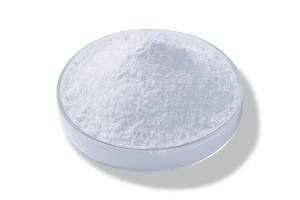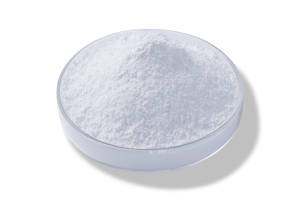
Tooth sensitivity is a common concern for consumers and an important consideration for oral care manufacturers developing specialized toothpaste formulations. When dentin becomes exposed, external stimuli such as cold, heat, and physical contact can trigger discomfort. One approach to managing this problem is dentinal tubule occlusion, which aims to reduce the movement of fluid within exposed dentinal tubules. At JSJ Silica, we develop ORASIL®709 ultrafine silica for sensitive toothpaste applications, using controlled particle size to support physical tubule blockage.
Understanding Tooth Sensitivity and Dentinal Tubule Exposure
Dentin is the layer beneath tooth enamel and contains numerous microscopic channels known as dentinal tubules. These tubules connect the outer dentin surface with the inner pulp region. When protective enamel wears down or gum recession exposes the root surface, dentinal tubules may become accessible to external stimuli.
According to the hydrodynamic theory of dentin hypersensitivity, temperature changes, air movement, and physical contact can cause fluid movement inside exposed tubules. This movement may stimulate nerves near the pulp, producing the short, sharp discomfort associated with sensitive teeth.
For oral care manufacturers, this creates a specific formulation objective: developing toothpaste that helps reduce sensitivity by limiting the accessibility or openness of exposed dentinal tubules. Physical occlusion is one approach to achieving this objective.
How Ultrafine Silica Supports Physical Dentinal Tubule Occlusion
Dentinal tubule occlusion involves depositing or retaining suitable particles at the openings of exposed tubules. When these openings are partially or substantially blocked, fluid movement within the tubules may be reduced, helping alleviate sensitivity caused by external stimuli.
Silica with appropriately controlled particle characteristics can serve this purpose in toothpaste formulations. Rather than relying exclusively on chemical desensitizing mechanisms, physical occlusion uses the particles themselves to cover or enter the openings of dentinal tubules. Suitable fine silica particles can therefore be considered for formulations designed to support this physical blocking mechanism.
Particle size is particularly important because dentinal tubules are microscopic structures. The dimensions and distribution of silica particles influence how they interact with exposed dentin surfaces and whether they can contribute to effective tubule blockage. However, particle size alone does not determine clinical performance. Particle morphology, formulation conditions, and the retention of deposited material also need to be considered.
Why Particle Size Matters in Sensitive Toothpaste Formulation
For ingredients intended to support dentinal tubule occlusion, particle size is more than a general material specification. It is directly relevant to how silica interacts with the microscopic openings on dentin surfaces.
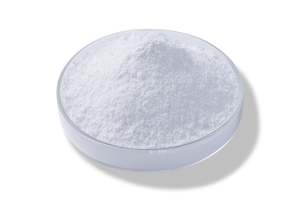
ORASIL®709 has a particle size of ≤4 microns and is designed for sensitive toothpaste applications involving physical dentinal tubule occlusion. These fine silica particles are intended to support manufacturers developing formulations that target exposed dentinal tubules through a physical blocking mechanism.
When evaluating an ultrafine silica grade, manufacturers should consider how its particle characteristics perform within the complete toothpaste formulation. Dispersion, ingredient compatibility, application conditions, and the interaction between particles and dentin surfaces can all influence the final result.
Appropriate testing is therefore essential. Microscopic observation of treated dentin surfaces can help assess tubule coverage, while suitable laboratory and sensitivity-related evaluations can provide additional evidence of formulation performance. These assessments help manufacturers determine whether a particular silica grade meets their product development requirements.
Formulation Considerations for Silica-Based Desensitizing Toothpaste
Selecting an appropriate silica ingredient is only one part of developing a sensitive toothpaste. Manufacturers must also consider the interaction between silica and other formulation components, including humectants, binders, surfactants, flavors, and other functional ingredients.
The formulation process should maintain sufficient particle distribution to support consistent contact with dentin surfaces. Manufacturers also need to evaluate the toothpaste’s texture, stability, cleaning characteristics, and compatibility with the intended use. These factors help ensure that the ingredient’s intended function can be incorporated into a commercially viable oral care product.
Importantly, the role of ORASIL®709 should be evaluated in the context of its intended application rather than assumed to extend to every function associated with ultrafine silica. Its primary positioning is physical dentinal tubule occlusion for sensitive toothpaste, and application-specific testing should guide formulation decisions.
Storage and Handling of ORASIL®709
Maintaining raw material quality is essential for consistent toothpaste production. ORASIL®709 should be stored in a cool, ventilated warehouse with appropriate moisture protection. It should be kept away from direct sunlight and fire sources, and mixed storage with chlorine trifluoride should be avoided.
Under recommended storage conditions, the product has a suggested shelf life of 24 months after production. If it has been stored for an extended period, manufacturers should test its moisture content before use to confirm that it remains suitable for the intended formulation.
ORASIL®709 is supplied in 25 kg small bags, providing a practical packaging option for transportation, storage, and production management. During handling, workers should use appropriate personal protective equipment, avoid dust inhalation, and maintain adequate ventilation.
Developing Better Sensitive Toothpaste Solutions with Ultrafine Silica
Effective sensitive toothpaste development requires a clear understanding of how ingredients interact with exposed dentin. Physical dentinal tubule occlusion offers manufacturers a formulation approach that focuses on blocking microscopic tubule openings and reducing the fluid movement associated with sensitivity.
At JSJ Silica, we provide specialized precipitated silica solutions for different industrial applications. Our ORASIL®709, with a particle size of ≤4 microns, is designed for sensitive toothpaste formulations targeting physical dentinal tubule occlusion. By offering application-specific fine silica particles, we support oral care manufacturers in evaluating suitable silica materials and developing formulations that address their product performance requirements.